Array layout review
Teams can submit roof drawings, row spacing, module frame size, target tilt, wind exposure, and obstruction notes. The review turns those inputs into a mounting direction instead of a generic product brochure.
Mounting Systems keeps service work narrow and useful: confirm the structure path, reduce ordering ambiguity, and help EPC teams move from array concept to shippable parts with fewer loops.
The service desk is designed for buyers who already know that a solar mounting package must survive practical constraints. A roof may have limited staging space, a ground site may need repeatable row hardware, and a tracker project may require coordination between mechanical interfaces and electrical routing. Instead of turning every question into a long consulting exercise, the team asks for the few inputs that control the answer and then returns a concise next step.
Teams can submit roof drawings, row spacing, module frame size, target tilt, wind exposure, and obstruction notes. The review turns those inputs into a mounting direction instead of a generic product brochure.
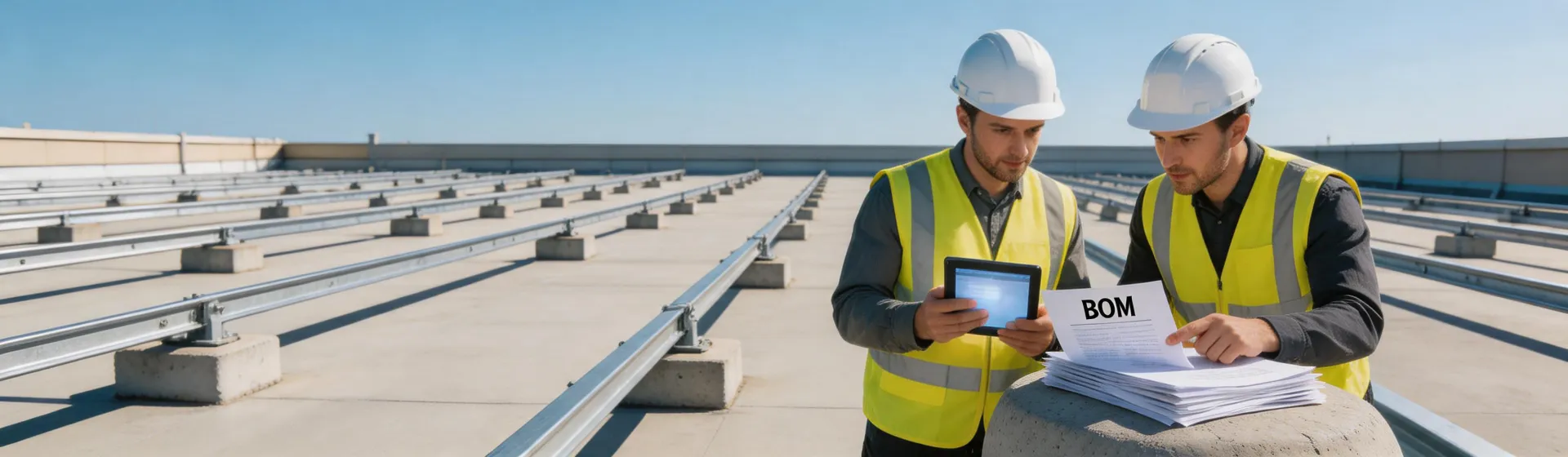
Rails, clamps, ballast, splice kits, ground lugs, flashing, posts, and fastener groups are mapped against the project type so purchasers can check quantities before release.
Installation crews receive clear notes on row sequence, torque reminders, cable paths, staging logic, and the assumptions behind the quoted mounting package.
Share site type, module plan, loading assumptions, and target delivery date.
Confirm roof or ground interface, hardware family, and documentation requirements.
Receive a focused quotation with BOM notes and exception items called out.
Stage hardware by family so the installation crew can locate parts quickly.
Every service response is tied to a mounting decision: attachment, rail, clamp, ballast, post, tracker interface, documentation, or packaging. The work is intentionally plain because procurement and installation teams need clear answers more than inflated promises.
Useful inputs include module size, rail direction, roof material, ground condition, pile preference, wind and snow data, local code references, packaging limits, and the expected first shipment date.
This page is intentionally procedural. It explains how the request moves, where decisions are made, and which data points prevent rework. For commercial buyers, that clarity is often more valuable than a broad service menu. It helps the purchasing team understand what can be quoted now, what still needs engineering confirmation, and which assumptions should be visible on the purchase order.
Mounting hardware decisions live at the intersection of structural engineering, PV module mechanics, and electrical bonding code. We anchor every BOM recommendation to the specific test methods and ratings the inspector or owner engineer will look for.
Site-specific wind speed, exposure category, snow load, and seismic class are required inputs. We document load assumptions per ASCE 7-16 / ASCE 7-22 so structural calcs are auditable for permitting.
Mid-clamps, end-clamps, and rail splices are listed to UL 2703 for bonding the PV module frames into the equipment grounding conductor without separate grounding lugs. We list compatible module manufacturers explicitly.
PV modules certified to IEC 61215 are tested at ±2400 Pa or ±5400 Pa front and rear loads. Our clamp zones and rail spans are specified to keep installed module loads within the certified envelope.
Single-axis trackers operate ±60° from horizontal with night and high-wind stow positions. We document slew motor torque, backtrack algorithm parameters, and IEC 62817 tracker reliability test compliance.
Equipment grounding conductor sizing, exposed metal bonding, and PV array DC grounding follow NEC 690 Article 45 and 47. Rail-integrated bonding paths are documented per UL 2703 for inspector review.
Roof-membrane warranty interaction, ballast-only installations on low-slope roofs, and seismic D/E zone bracing are not universally certified. We flag these as project-specific engineering reviews rather than catalog-spec answers.