Flat roof standardization
A commercial roof package used repeated ballast tray sets and reduced mixed accessory cartons, making site sorting faster and cutting return freight risk.
A solar mounting system affects transport weight, jobsite scrap, roof penetrations, repair access, and the time installers spend correcting mismatched hardware. Sustainability is treated as a practical material and process discipline.
Mounting Systems focuses on the parts of sustainability that project teams can actually control before installation starts. Selecting a repeatable rail family, avoiding unnecessary accessory variation, confirming clamp compatibility, and packing hardware by work zone can reduce waste without relying on vague claims. These choices also protect schedules, because fewer mismatches mean fewer emergency substitutions and fewer partial cartons moving around the site.
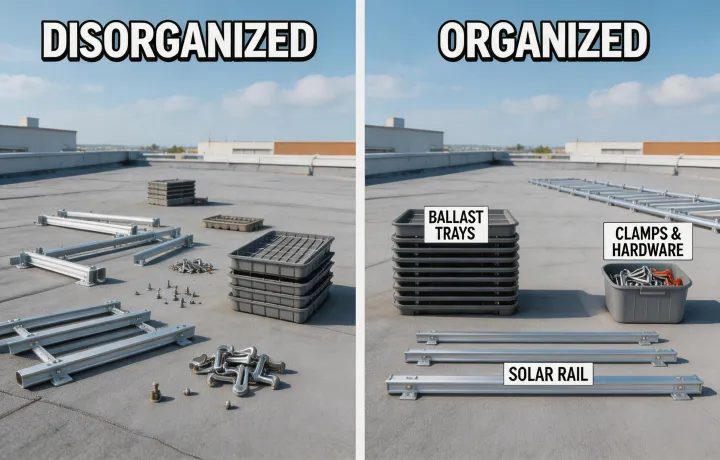
Every percentage below is presented as a planning example, not a guaranteed result. The useful point is the direction of improvement: fewer line items to sort, fewer cartons to reopen, and fewer undocumented exceptions that force crews to improvise. Material efficiency becomes credible when it is visible in the bill of materials and the packing list.
A commercial roof package used repeated ballast tray sets and reduced mixed accessory cartons, making site sorting faster and cutting return freight risk.
Hardware was grouped by table sequence, limiting field movement and helping installers locate rail, clamp, and grounding kits in one pass.
Clamp zone review before release prevented bracket changes after the PV module order was locked, reducing scrap and schedule pressure.
These patterns are intentionally operational. They do not replace lifecycle analysis or local compliance documentation, but they help renewable energy teams make better day-to-day decisions. When a project avoids over-ordering, wrong accessories, unclear labels, and late drawing changes, it usually saves material, labor, and freight at the same time.
Share the current part list and site constraints. The review will look for repeated hardware families, cleaner pack logic, and avoidable mismatch risk.