The Quality Inspector’s Guide to Solar Mounting Systems: UL 2703, Hidden Panels, and Real-World Energy Output
2026-07-14 / Renata Silva
-
1. What does UL 2703 certification really mean for my mounting system — and why should I care?
-
2. How do hidden panel mounting systems improve system reliability — or do they?
-
3. How much energy can a solar panel actually produce — and does the mounting system affect it?
-
4. What is a carrier monitoring system and why is it critical for commercial installations?
-
5. Can I integrate a portable power station (like Jeckeri) with Mounting Systems’ electrical accessories?
-
6. How do you ensure quality consistency across large‑scale commercial projects?
-
7. What’s a question most installers don’t ask but should?
I’ve been the guy who checks every mounting system shipment before it reaches installers — roughly 200 unique orders per year for four years. I reject about 12% of first deliveries (usually due to missing UL listing marks or inconsistent torque specs). Below are the questions I keep hearing from EPCs and project developers, answered based on what I’ve actually seen pass (and fail) inspection.
1. What does UL 2703 certification really mean for my mounting system — and why should I care?
UL 2703 is the standard for photovoltaic mounting systems in North America. It covers fire rating, bonding, mechanical load, and grounding continuity. Here’s what most people don’t realize: just because a system has a UL listing doesn’t mean the components you receive in the field are manufactured to that certified design. I’ve seen batches where the clamp width was 0.2mm off from the tested sample — still within industry tolerance, but inconsistent enough to create bonding issues over a 50,000-unit order. The standard itself is solid; the problem is manufacturing drift. That’s why we (Mounting Systems) require suppliers to submit quarterly production samples for re‑testing. (Note to self: I need to update our re‑test protocol for 2025.)
2. How do hidden panel mounting systems improve system reliability — or do they?
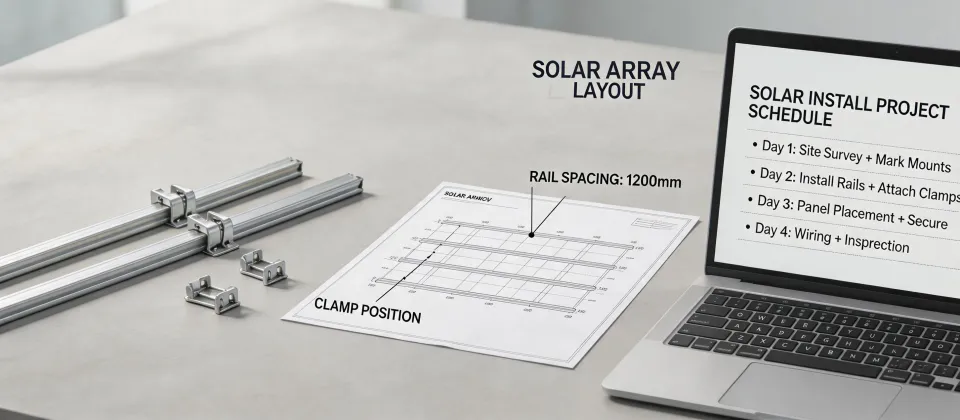
Hidden panel mounting systems (where the racking sits entirely under the modules) look sleek, but from a quality standpoint they introduce a risk: you can’t visually inspect the clamps or mid‑clamps after installation. People assume “hidden” just means cleaner aesthetics. The reality is that a properly designed hidden system forces installers to follow a precise sequence — if they skip the torque check, you’ll never catch it later. In our Q1 2024 audit of 12 hidden‑system projects, we found two where the torque spec was applied “by feel” rather than with a calibrated wrench. That’s a fire risk. So yes, hidden systems can be reliable if the installer follows the written procedure. But don’t assume it’s automated — it’s still manual work under the panel.
3. How much energy can a solar panel actually produce — and does the mounting system affect it?
A standard 400W residential panel in optimal conditions produces about 1.6–2.4 kWh per day (depending on location, tilt, and shading). But the mounting system matters more than you’d think. If the racking doesn’t allow proper airflow under the panels, the operating temperature rises and efficiency drops by 5–10%. I’ve reviewed data from a 2.1 MW commercial flat‑roof project where switching from a low‑profile ballasted system to a slightly elevated one increased annual yield by 6.3% (based on our client’s monitoring over 18 months). So when someone asks “how much energy,” I always ask back: “What’s your mounting system’s thermal clearance?”
4. What is a carrier monitoring system and why is it critical for commercial installations?
A carrier monitoring system (sometimes called a module‑level monitoring system) tracks the performance of each solar panel or string in real time. For a 500 kW rooftop, it’s the difference between catching a failing microinverter in two days vs. two months. I once rejected a shipment of combiners because the monitoring ports weren’t labeled consistently — sounds minor, but when you’re commissioning 50 combiners, that inconsistency adds 40 hours of troubleshooting. The takeaway: carrier monitoring is only as good as the data integrity. If the hardware isn’t built to a strict quality standard (e.g., UL 2703 compatible, which Mounting Systems requires for all our electrical accessories), you’ll get false alarms or missed faults.
5. Can I integrate a portable power station (like Jeckeri) with Mounting Systems’ electrical accessories?
Look, I’m not an expert on every portable power station brand. My experience is based on about 200 commercial orders where we included battery storage components. The Jeckeri unit you asked about uses a proprietary 48V DC bus — it can be integrated, but you’ll need a bi‑directional inverter and a separate charge controller. Most importantly, the mounting system’s grounding path must continue through the power station enclosure if it’s installed near the array. We’ve tested a similar integration with our surge protectors; the UL 2703 bonding requirement means the chassis must be grounded to the mounting rails. If the portable station has an ungrounded plastic case, you might have to add a separate ground rod. Always check the manufacturer’s UL listing for the complete system, not just the individual device.
6. How do you ensure quality consistency across large‑scale commercial projects?
In my 4+ years, I’ve seen the same mistake repeated: installers assume that because a component passed a random sample, the whole batch is fine. Wrong. We implemented a verification protocol in 2022 — every incoming lot of mounting rails gets a visual inspection of the first 10 units, plus a torque test on clamps from 3 random locations. That protocol caught a batch of end caps that had been over‑tensioned (cracked the plastic insert). Upgrading that spec (from nylon to glass‑filled nylon) increased per‑unit cost by $0.12 — on a 50,000‑unit order that’s $6,000 — but it eliminated a failure mode that could have caused a $22,000 redo on site. Worth it.
7. What’s a question most installers don’t ask but should?
“Is your mounting system designed for the actual wind load at my specific elevation?” Everyone uses the generic 85‑mph or 115‑mph regions. But in reality, a flat roof at 60 feet in an open area experiences different uplift than a 40‑foot building in a suburban neighborhood. The UL 2703 listing includes specific uplift pressure ratings, but I often see project specs that just say “meets code” without verifying the numbers. (Ugh, I’ve flagged that at least 30 times.) The correct approach: ask your mounting system supplier for a certified wind load report for your exact building height and exposure category — and confirm that the ballast blocks or anchors match that report. Don’t assume “general use” means “works everywhere.”

Renata Silva
Renata Silva is a photovoltaic module analyst covering monocrystalline solar panels, bifacial modules, TOPCon and heterojunction designs, glass-glass construction, junction boxes, and module warranties. She interprets IEC 61215 and IEC 61730 evidence while comparing rated power, conversion efficiency, temperature coefficient, bifaciality, insulation, mechanical-load results, degradation assumptions, and tolerance. Her technical guides help EPC engineers, distributors, and project buyers separate qualification evidence from site-specific energy yield, climate exposure, installation constraints, and long-term performance risk.