Why I Stopped Asking Suppliers 'What Can You Do for Me'
2026-05-12 / Renata Silva
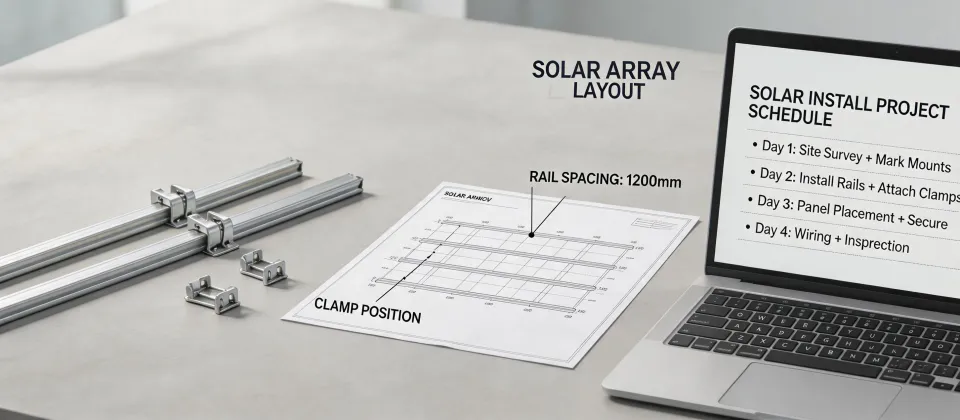
Look, I'll be honest. For the first few years managing purchasing for our company, my go-to question for any new vendor was pretty straightforward: "What can you do for me?"
It sounds right, doesn't it? You're trying to find the best fit. You want to see their full range. But after a few expensive lessons, I've flipped the script. The question I ask now is a lot more uncomfortable for them, and a lot more revealing for me: "What can't you do?"
Here's why that shift happened, and why it matters when you're sourcing critical components like pv mounting systems or a deye 3kw solar inverter.
The Surface Problem: The One-Size-Fits-All Pitch
The surface problem is familiar to anyone in procurement. You send out an RFP for your mounting-systems needs. You get back five responses. Four of them are variations on the same theme: "We can do it all. We have the best price. We have the fastest turnaround. Your project is perfect for our standard solution."
It feels good. It feels efficient. But I've learned that the pitch that sounds too perfect usually hides something.
The Deeper Cause: The Fear of Saying 'No'
Here's the thing I didn't understand early on: most suppliers are terrified of saying no. They think if they admit a limitation, they'll lose the business entirely. And in a competitive market for solar racking and structural support, that fear is understandable.
But the problem is that this fear creates a web of small, unspoken compromises. They'll say their solar mounting hardware kit works for your specific roof profile, even if it's a hack. They'll quote a timeline they can't actually hit because their material supplier is backed up. They'll promise integration with your existing setup, knowing it's going to require a custom adapter plate they'll have to eat the cost on.
Most buyers focus on per-unit pricing and completely miss the setup fees, revision costs, and coordination headaches that can add 30-50% to the total. The cost of a failed promise is always higher than the cost of a 'no' upfront.
The Cost of 'Yes'
I learned this the hard way in 2022. We were sourcing components for a small commercial ground-mount project. We needed a specific configuration for an adjustable solar panel bracket. One major supplier said, "No problem, our standard line will work."
They couldn't provide a proper invoice for the custom work (handwritten receipt only). Finance rejected the expense report. I ate $1,800 out of the department budget for the re-installation. Now I verify capability—and limitation—before placing any order.
The cost wasn't just the $1,800. It was the three weeks of project delay. It was the internal credibility I lost with my operations team. It was the awkward conversation with my VP explaining why we had to go back to a different vendor mid-project.
Then there was the time a supplier couldn't deliver a solar tracking system component on time because they'd over-promised on lead times across multiple clients. That cost us a tax credit deadline.
The vendor who said 'this isn't our strength—here's who does it better' earned my trust for everything else. I'd rather work with a specialist who knows their limits than a generalist who overpromises.
The Real Cost of Ignoring 'No'
But here's what most buyers don't think about. The cost of a bad fit isn't just financial. It's a risk to your reputation. If I sign a contract for a rooftop solar racking system that fails within two years because the supplier's claims were inflated, I look bad. Not the supplier. Me.
When you're trying to figure out how to disconnect car battery to reset computer for a fleet vehicle, you're not looking for a sales pitch. You want a clear, direct instruction. The same principle applies to my vendor relationships. I want clarity. I want boundaries. I want the truth about what they can and cannot do, because that's what allows me to make an informed decision.
It's tempting to think you can just compare unit prices. But identical specs from different vendors can result in wildly different outcomes when you factor in their actual capabilities and limitations.
The question isn't 'Can you do this?' It's 'What will go wrong if you try?'
The Alternative: A Better Approach to Vendor Evaluation
So, what does this look like in practice? Instead of asking a supplier for their full capabilities list, I now specifically ask about their boundaries. It's a simple shift, but a powerful one.
Here are the three questions I ask every supplier now, especially for specialized products like solar wind generator off grid system components:
- What is the most common project you turn down?
This tells you where their comfort zone ends. - What part of your standard process has the longest lead time?
This helps me plan and prevents timeline surprises. - If my project is a 90% fit for your standard solution, what's the 10% that's not?
This forces them to be honest about customization needs.
Honestly, I'm not sure why some vendors consistently beat their quoted timelines while others consistently miss. My best guess is it comes down to internal buffer practices. A vendor who can't answer these three questions clearly probably doesn't have a firm grasp on their own operational limits.
Bottom Line: Expertise Has Boundaries
Here's the bottom line. A supplier who says 'we do everything' is either lying or isn't doing anything particularly well. In a technical field like solar mounting hardware, you want the specialist who knows their limits.
I'd rather pay a premium for a specialist who says, 'This is our lane—and we're the best in it,' than get a bargain from a generalist who promises the world but delivers a headache. A good vendor makes you look good to your team. A bad one, even if they're cheap, is a liability.
This was accurate as of Q1 2025. The solar supply chain changes fast, so verify current pricing and lead times before budgeting.

Renata Silva
Renata Silva is a photovoltaic module analyst covering monocrystalline solar panels, bifacial modules, TOPCon and heterojunction designs, glass-glass construction, junction boxes, and module warranties. She interprets IEC 61215 and IEC 61730 evidence while comparing rated power, conversion efficiency, temperature coefficient, bifaciality, insulation, mechanical-load results, degradation assumptions, and tolerance. Her technical guides help EPC engineers, distributors, and project buyers separate qualification evidence from site-specific energy yield, climate exposure, installation constraints, and long-term performance risk.