Integrated or Component-Based Mounting Systems? A Field Comparison
2026-08-28 / Renata Silva
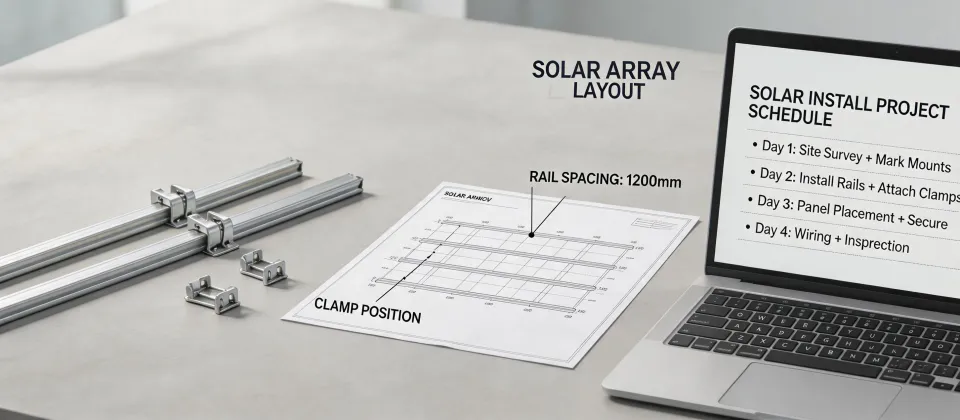
In my role coordinating mounting systems for solar PV, battery storage, and industrial equipment, 'what's the difference' usually comes down to two approaches: integrated systems, where the rack, battery interface, and monitoring are designed to work together, and component-based systems, where you buy the best individual pieces and make them fit.
If you're here because you want a 'battery energy storage system explained' in plain English, this comparison covers that too, because storage only works if the mounting system underneath it is right.
1. Compatibility: This Is Where Projects Go to Die
Integrated systems are boring in the best way. One rail system, one set of bolts, one torque spec. That sounds trivial until you're standing in a garage with a battery cabinet that won't align with the rack because the slot spacing is off by six millimeters.
This is why garage wall mounting systems from the same supplier as your battery storage are worth taking seriously. The wall rail, the mounting bracket, and the battery tray are designed as a unit. You don't need an adapter plate. With component-based systems, you become the integrator.
If a client needs a Loctite mounting bracket for CureJet systems, for example, the correct bracket has to match both the equipment body and the mounting rail. A generic bracket might physically fit, but it might not have the right thread engagement or adhesive interface. I ignored that warning once and paid $2,300 to fix a mismatch.
Verdict: Integrated wins for most interfaces. Component-based wins only when you have a specific technical requirement that no integrated package covers.
2. Lead Time: When the Clock Is the Client
In March 2024, a client called at 2 p.m. needing a garage wall mounting system for a battery room remodel. The site inspection with the utility was scheduled 36 hours later. Normal lead time for a custom rack would have been ten days. The integrated system shipped that afternoon. We paid around $180 in premium freight. The client's alternative was postponing the inspection at a cost of $6,000.
But integrated doesn't always mean faster. Specialty components, like a Loctite mounting bracket for CureJet systems, often have a manufacturing lead that no amount of rush shipping can fix. That's not a failure; it's physics. We learned to quote those honestly.
One thing I only believed after ignoring it: when a vendor says 'usually two weeks,' they mean two weeks if nothing goes wrong. Once, I didn't listen and lost a week waiting for a bracket that arrived with the wrong bolt pattern. Since then, our policy is a 48-hour buffer on every critical deadline.
Verdict: If speed is the priority and a proven integrated system exists, choose it. If the component is specialized, verify the real lead time before promising a date.
3. Reliability and Support: Who Do You Call at 11 p.m.?
Reliability is about more than the metal. It's about what happens when something goes wrong at the worst possible time.
If you're searching 'what is a network monitoring system,' the short answer is software that watches your solar array, battery, and grid connection and alerts you when something deviates. But a network monitoring system is only useful if the data is trustworthy. An integrated setup gives you one vendor to call. A component-based setup means your monitoring, inverter, battery, and mounting bracket each has a different support line.
I remember a project where the client used a solar battery deep cycle unit rated for repeated discharge, a wall rack from another manufacturer, and a monitoring gateway from a third. The system worked, but only after three days of troubleshooting voltage readings. It turned out the battery cable lug didn't seat properly in the wall-mount bracket's bus bar. That's a compatibility issue no spec sheet would catch.
Verdict: Integrated systems reduce finger-pointing. That's not a sales pitch; it's a project-management reality.
4. Total Cost: Upfront Price vs. Lifetime Cost
For anyone looking for a 'battery energy storage system explained' in financial terms: the battery is the expensive part, but the mounting and integration cost are where budgets get decided.
Component-based can look cheaper at first. One rack from supplier A, one wall bracket from supplier B, one solar battery deep cycle from supplier C. But total cost includes your engineering time, adapter plates, extra shipping, and the risk of a failed inspection.
An integrated system isn't automatically the premium option. It shifts engineering cost to the factory, where it belongs. We've seen integrated systems that were less expensive than a mismatched collection of parts once rush fees were added.
To be fair, if you have in-house engineering resources and a flexible schedule, the component route can still make sense. This was accurate as of Q4 2024. Mounting standards and battery technology change fast, so verify current specs and pricing before committing.
Verdict: For most projects, integrated delivers lower total cost. For special requirements, component-based can be worth the extra coordination.
5. My Rules for Choosing
After more than 200 rush orders, I've landed on a simple framework:
- Choose integrated for solar PV racking on a roof or ground mount, wall-mounted battery storage in a garage, and any project where a missed interface means a missed deadline.
- Choose component-based for retrofits with existing equipment, specialty parts like a Loctite mounting bracket for CureJet systems, and teams with dedicated integration resources.
Even after choosing the integrated system on a recent job, I kept second-guessing. What if the new bracket's bolt pattern didn't match? I didn't relax until the torque wrench clicked on the first connection. The spreadsheets said component-based was 12% cheaper; my gut said integrated. We went with the integrated system and finished without a single adapter. Later we learned the cheaper rack had a rail thickness that would have required a different clamp.
Maybe 200, maybe 180—I'd have to check the system. The lesson is the same: compare the full system, not just the sticker price.

Renata Silva
Renata Silva is a photovoltaic module analyst covering monocrystalline solar panels, bifacial modules, TOPCon and heterojunction designs, glass-glass construction, junction boxes, and module warranties. She interprets IEC 61215 and IEC 61730 evidence while comparing rated power, conversion efficiency, temperature coefficient, bifaciality, insulation, mechanical-load results, degradation assumptions, and tolerance. Her technical guides help EPC engineers, distributors, and project buyers separate qualification evidence from site-specific energy yield, climate exposure, installation constraints, and long-term performance risk.