Ballasted vs. Mechanically Attached Solar Mounting Systems: A Comparison from an Expediter’s Desk
2026-09-16 / Renata Silva
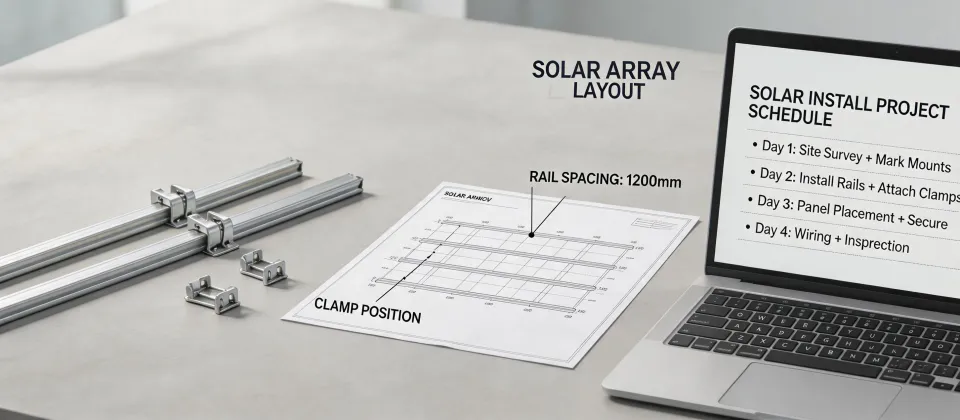
In my role coordinating urgent mounting-system orders for Mounting Systems, I don’t stamp structural drawings. I’m the person who gets called after somebody realizes a rooftop racking plan might not work. Last quarter alone, we processed 47 rush orders with 95% on-time delivery. The ones I remember weren’t the late shipments—they were the orders that needed an emergency redesign because the mounting concept didn’t match the roof.
Search queries like “best solar panel roof mounting systems” often expect a brand list. What I’ve learned is that the real choice comes before rail brands: solar ballast mounting systems versus mechanically attached roof mounting systems. Compare those first, and brand decisions get easier.
Solar ballast mounting systems use concrete blocks or precast pavers to hold the array down, so no roof penetrations are needed. Mechanically attached mounting systems transfer the load to the building structure through anchors, clamps, or flashed posts. Both are proven. I’ve also seen both create emergency freight bills when the wrong roof assumption was carried through procurement.
1. Structural Fit: The Roof Gets a Vote
Ballasted systems add real dead load. If the existing roof has spare structural capacity, that’s usually fine. If it doesn’t—an older metal building is the classic example—a ballasted layout can exceed the building’s loading limits before you add a single module.
Mechanically attached systems shift most of the reaction into the deck or supporting members. They still require anchor pullout checks and attachment points have to land on something solid, but they don’t ask the entire roof structure to support a concrete yard.
All of this still needs to be checked against ASCE 7-22 wind provisions and local amendments. I don’t do that calculation, because it isn’t my lane. A supplier who quotes a ballast layout without asking about structural capacity is giving you a price, not a solution.
Comparison conclusion: If the roof has reserve structural capacity, ballasted is often the lower-friction route. If the roof is light or already loaded, mechanically attached is usually the system that gets approved. That’s the first filter.
2. Roof Warranty and Membrane Risk
Ballasted systems have one obvious advantage: no holes in the roof membrane. Roofing manufacturers generally treat penetrations from another trade as a warranty risk unless the flashing is done by an approved roofer. A ballasted layout avoids that coordination step.
But “no penetrations” doesn’t mean “no contact.” Ballast blocks can abrade the membrane if the mounting system doesn’t use proper pads or ballast trays. It also doesn’t mean the blocks will never move after installation. The loose pieces are part of the maintenance story, which I’ll get to in a minute.
Mechanically attached systems are not automatically leaky. Or rather, the leak risk depends almost entirely on detail quality and on whether the flashing follows the roofing manufacturer’s requirements. That takes a roofing contractor’s time, but it can still preserve the roof warranty if the work is documented correctly.
Comparison conclusion: For an existing roof where the owner does not want any penetration, ballasted is usually the easier warranty answer. For a new roof or a reroof where flashings are planned in advance, mechanically attached can be just as protective.
3. Schedule: The Ballast Approval Problem
People often assume ballasted installations are faster, and in the field they can be. Once structural sign-off is done, you aren’t waiting for a roofer to flash every post. You are moving concrete. But the structural approval step can eat the schedule advantage.
Here’s a real example from March 2024. A commercial EPC firm had a low-slope roof fully scheduled. The structural engineer reviewed the design and flagged the ballast weight, which meant their racking order was wrong three days before crews mobilized. The racking normally had a ten-business-day lead time. Our engineering team revised the layout to a mechanically attached system, and I expedited the replacement rail from the factory. If I remember correctly, the extra freight was just under $1,400. The crew started on time, but the client almost paid far more than the racking difference in idle labor and delay damages. The root problem wasn’t ballasted or attached—it was that the structural review happened late.
Comparison conclusion: Ballasted can win on installation labor, but attached often wins when the roof capacity is uncertain. The schedule risk is hidden in approvals, not in the mounting hardware.
4. Cleaning, Maintenance, and the Ballast That Moved
Once an array is up, it’s not left alone. In dry, dusty climates, solar panel cleaning is routine maintenance. The problem isn’t the cleaning; it’s what happens when cleaning crews encounter loose ballast blocks.
We once handled a support request from a solar panel cleaning Wildomar, California provider that had shifted ballast blocks to reach a row of modules. They put the blocks back, but not in the exact positions. It looked fine from a distance. The array’s wind-load distribution wasn’t fine. The incident cost more than the cleaning job and created an emergency service call.
This is why service access should be part of the mounting-system comparison. Ballasted systems require clear rules about who can move ballast and who resets it. Mechanically attached systems have fewer loose pieces, but they still have live DC wiring and roof edges. If you hire a cleaning company, have an O&M agreement that says nobody moves racking components without approval.
Comparison conclusion: From a maintenance standpoint, mechanically attached systems are easier to manage. Ballasted systems are not disqualified, but they require more training and more discipline.
The Boundaries I Keep: EV Chargers and Wind Turbines
Mounting systems are a specialty. I’d rather draw a boundary than overpromise. For instance, a solar carport can include an EV charger installation in Irmo SC, but the charger is electrical work with its own grounding, conduit, and utility coordination. The canopy may use our mounting system; the charger pedestal does not. A good team knows where that handoff happens.
Someone always asks how much land does a wind turbine need, and I answer honestly: it depends on turbine size, rotor spacing, local setbacks, and terrain. Wind developers model wake effects before they give a land requirement. A single turbine pad might be only an acre or so, but the total land needed around it can be much larger. If that question appears early, include a wind consultant. A racking supplier should not bluff their way through that study.
What I Would Order After This Comparison
If you need a final recommendation, ignore the brand for a minute and choose the family that fits your constraints:
- Choose ballasted when the structural review shows reserve capacity, the roof membrane should not be penetrated, and your maintenance team can control ballast placement.
- Choose mechanically attached when roof capacity is tight, flashings can be coordinated with a roofer on a new or recovering roof, or you want fewer loose components over the building’s life.
That still won’t fit every project. But it fits most commercial low-slope roofs and saves people from the urgent call I answer. The best solar panel roof mounting systems aren’t discovered through stickers or catchphrases. They’re the ones that pass structural review, protect the roof, arrive on schedule, and stay put for the life of the asset.

Renata Silva
Renata Silva is a photovoltaic module analyst covering monocrystalline solar panels, bifacial modules, TOPCon and heterojunction designs, glass-glass construction, junction boxes, and module warranties. She interprets IEC 61215 and IEC 61730 evidence while comparing rated power, conversion efficiency, temperature coefficient, bifaciality, insulation, mechanical-load results, degradation assumptions, and tolerance. Her technical guides help EPC engineers, distributors, and project buyers separate qualification evidence from site-specific energy yield, climate exposure, installation constraints, and long-term performance risk.