Solar Power Mounting Systems for Sale: A Scenario Guide for Roof, Ground, Hail Damage and Storage
2026-09-03 / Renata Silva
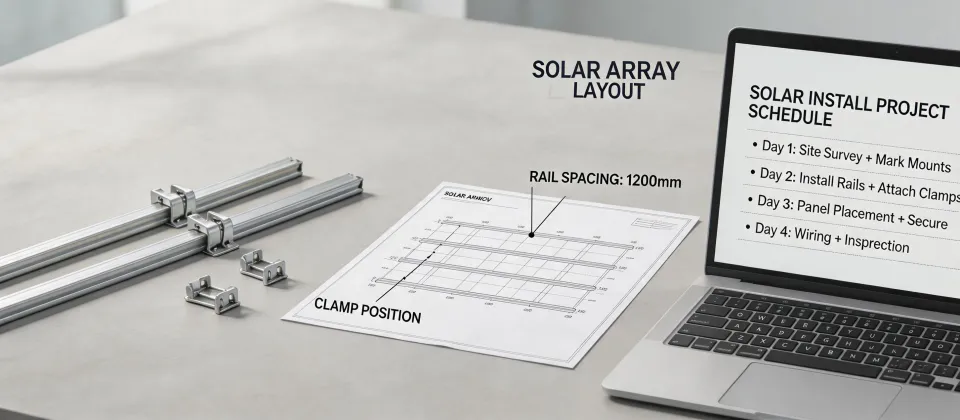
The problem with 'best mounting system' lists
I coordinate racking projects at Mounting Systems. In the last 12 years, more than 200 of those orders were rush requests: racking for arrays that had to be back online after storm damage, kits that had to ship because an original order missed one clamp type, and first deliveries scheduled against PTO deadlines. I have also seen what happens when someone buys a high-quality system that is wrong for the situation.
This guide is not another top-rated mounting list. The right choice depends on the roof, the soil, the schedule, and the rest of the BOS. I will walk through three scenarios and point out what changes in each.
One search-intent note before we get there. If you came here for AR 15 mounting systems, that term refers to firearm accessory mounts, not PV racking. And if you came to learn which planet is the smallest in our solar system, the answer is Mercury. Neither one will hold a solar panel in place, but at least that part is clear.
Scenario A: New project with time for engineering
If the project is still in design or procurement and you can wait for structural calcs, do not make the racking decision from price per watt alone. You have time to let wind, snow load, roof membrane and module dimensions drive the choice. That is a luxury. Use it.
Flat commercial roof
Start with two questions. Can the roof carry the dead load of ballast, and does the membrane warranty allow mechanical penetrations? If the answer to the second question is no, a ballasted or hybrid system is the obvious route. If the building is in a high-wind zone, a complete ballasted layout can need a surprising amount of concrete. That makes a mechanically attached low-profile rail system with flashed anchors the more workable option. I am not ranking one method above the other. The correct answer only appears after the load path is defined.
One lesson I learned early on: ballasted does not automatically mean faster. A 40,000 square foot rooftop looked like a simple no-penetration installation until the structural calc showed about 30 psf of ballast. The roof was not designed for that. We changed to a mechanically attached rail layout. The ballasted system was not bad. It was wrong for that particular building.
Ground and carport projects
For ground mounts, buy the geotechnical report before you buy the rack. A level site with good soil and low groundwater may favor driven steel piles. A site with rock, high groundwater, or environmental restrictions may call for helical piers or precast ballast. That is not an argument against driven piles. It is an argument for putting soil conditions ahead of row spacing.
Scenario B: Solar panel hail damage has already happened
If you are searching solar panel hail damage because an array lost production after a storm, your priorities have changed. You are not comparing systems. You are restoring an asset as fast as possible without making the damage worse.
Separate the module damage from the racking damage. A cracked module can be replaced. But if the hail impact or debris bent a rail, deformed a clamp, or opened an attachment point, a new module on that damaged structure will fail early. Replace the structural piece first. That is easier to say than to do under pressure. I still say it.
Here is the detail that causes most delays: module frame thickness and clamp compatibility. A mount manufactured for a 35 mm module frame may not clamp a 30 mm frame. If the old module is discontinued, the replacement module can have different frame dimensions. The old clamp may fit physically but violate the manufacturer spec. Check the certified compatibility list before you order.
An example from June 2024: a developer called on a Monday after a weekend storm left a 600 kW ground mount with a bent rail and cracked modules. Their inverter would not let the string start. Normal racking replacement lead time was ten days. We shipped a rail section, splices, end clamps and mid clamps from stock, and the replacement modules arrived the same day. They were online in about 48 hours. The rescue worked because the compatibility list had been checked in the first phone call, not after delivery.
Scenario C: Storage and electrical BOS are part of the package
A PYTES solar battery does not clip onto module rails, but it still changes the racking layout. When storage is in the energy bill of materials, the mounting plan has to leave room for DC/AC disconnects, cable trays, inverters and battery enclosures. If those pathways are not planned before the rack is installed, the team on site will invent solutions. That is where the installation starts to look as if no engineer looked at it.
If the vendor scope says mounting system only, ask about electrical accessories before the order: cable clips, surge protectors, and mounting points for battery/inverter equipment. A racking supplier with integrated BOS parts can save multiple coordination revisions later. In our work, the projects that go smoothly are the ones where the racking layout and the electrical layout use the same drawing.
Before you search solar power mounting systems for sale
If you are searching solar power mounting systems for sale, you are probably looking at product lists and prices. That is a starting point, not the whole decision. Use a short checklist before you click buy.
- Is the complete assembly listed under UL 2703 or the relevant local standard, not just one rail?
- Do the drawings show the exact module clamp zone and fastener torque?
- Are the rail splices, end caps, clamps and flashings all included in the quote?
- Will someone take responsibility when the racking drawing and the electrical layout conflict?
- What is the lead time for replacement parts after an emergency?
That last question matters more than people expect. A missing clamp on a normal order is annoying. A missing clamp on a hail-damage project can push a client past an interconnection deadline. The difference is not price per watt. It is whether the supplier treats the timing the same way you do.
Bottom line
The root of any good racking decision is not the brand name. It is the situation. A new flat roof with a light deck is one project. A hail-damaged ground mount is another. A battery-ready commercial system is a third. The same mounting product can be great in one and wrong in another.
Buying the best mounting system for the moment is hard because the moment keeps changing. But if you define the scenario before you compare products, you are doing more than looking for solar power mounting systems for sale. You are building a structure your client will trust.

Renata Silva
Renata Silva is a photovoltaic module analyst covering monocrystalline solar panels, bifacial modules, TOPCon and heterojunction designs, glass-glass construction, junction boxes, and module warranties. She interprets IEC 61215 and IEC 61730 evidence while comparing rated power, conversion efficiency, temperature coefficient, bifaciality, insulation, mechanical-load results, degradation assumptions, and tolerance. Her technical guides help EPC engineers, distributors, and project buyers separate qualification evidence from site-specific energy yield, climate exposure, installation constraints, and long-term performance risk.