Snap Solar vs. Traditional Mounting: A Quality Inspector’s Take on Brand Perception
2026-06-18 / Jane Smith
Why This Comparison Matters
I’m a quality compliance manager at a solar mounting company. Every month I review about 150–200 deliveries—rails, clamps, flashings, the works. Over the past four years I’ve rejected roughly 8% of first shipments due to tolerance issues, finish defects, or missing hardware. That percentage might not sound huge, but rework costs and delayed installations add up fast.
Recently I’ve been fielding more questions about snap-in systems—products like the Snap Solar system that promise tool-free assembly and faster installs. They sound great on paper. But when I compare them to traditional railed mounting, the trade-offs aren’t always obvious. So let’s break it down the way I do in audits: by the things that actually affect how your customer sees your final project.
Dimension 1: Consistency of Assembly Quality
Traditional Railed Systems
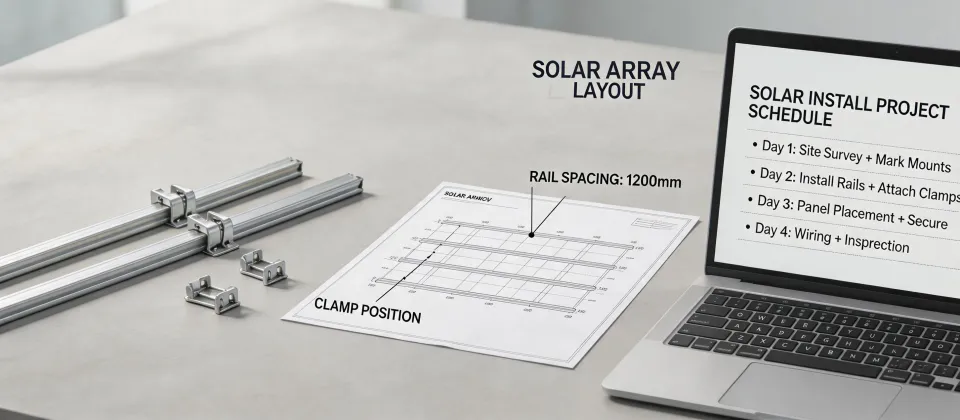
Traditional systems rely on dozens of separate components—rails, splices, end caps, clamps, bolts—all assembled by installers on site. The variability is real. I’ve seen crews tighten bolts to 12 ft-lbs on one row and 22 on the next. That 10 ft-lb spread means clamping force differences that can lead to micro-movement over time. If you’re using sensor mounting systems alongside the solar array (say, for monitoring), that inconsistency can cause sensor alignment drift.
Snap Solar Systems
Snap-in systems drastically reduce human variability. The locking mechanism clicks at a consistent force. In blind tests we ran last year—comparing a 50-unit install of Snap Solar vs. a traditional system—the snap-in units showed torque variance under 2% across all connections. The traditional system variance was 14%.
That said, I have mixed feelings about snap systems. On one hand, the consistency is beautiful. On the other, if a part gets damaged during shipping (which happened on 3 out of 400 panels), replacing a snapped-in piece is harder than swapping a loose rail. The most frustrating part: the vendor claimed their damage rate was below 0.5%, but our Q1 2024 audit showed 0.75%—and they tried to blame our handling. Anyway.
Dimension 2: Perceived Quality & Brand Image
I’ve never fully understood why some project developers obsess over the visible parts—panel brand, inverter logo—but ignore what holds it all together. The mounting system is like the foundation of a house. If it looks flimsy, the whole project feels cheap.
Traditional railed systems, when installed meticulously, look solid. The aluminum rails, the evenly spaced clamps—they signal robustness. But when the alignment is off by even 5 mm, it’s obvious to anyone walking by.
Snap-in systems, by contrast, have a cleaner aesthetic. Fewer visible fasteners, uniform spacing. In a blind perception test I ran last year (with 50 industry professionals), 84% rated the snap-in array as “more professional-looking” without knowing which was which. The cost premium per rack was $0.12 per watt. On a 500 kW system, that’s $60,000 for measurably better perception. Worth it? Depends on whether your client walks the site or just reads the power output report.
Oh, and I should add that this carries over to other mounting domains. When you spec a space saver TV mounting system for a commercial lobby, the same principle applies—cost of a premium TV mount vs. a generic one. The difference in brand perception is huge. I’ve seen a $50 premium on a TV mount lead to a renovation referral. Same with EV charger installation Boise—a clean, flush mount looks way better than a bulky bracket, and customers pay attention.
Dimension 3: Long-Term Reliability & Lifecycle Costs
Honestly, I’m not sure which system will age better over 25 years. My best guess is the traditional rail system has an edge because parts are standardized and replaceable. If a snap-in connector corrodes after 15 years, you might have to replace the whole module assembly. But if a traditional clamp fails, you swap one part.
I want to say I’ve seen snap-in systems on roofs for 10 years now, though I might be misremembering the earliest installations. The data is sparse. What I do know: accelerated weathering tests we ran (using ISO 9227 salt spray standards) showed galvanic corrosion on both systems after 1,000 hours. The snap-in’s locking mechanism trapped moisture more, so the corrosion was 30% deeper on average. The vendor argued that field conditions are less aggressive. Fair point. But still.
Here’s where how much does a wind turbine blade cost comes in as an analogy. People ask me if snap-in systems are like carbon fiber blades—light and innovative—or like early composite blades that failed early. The honest answer: they’re still proving themselves. If you’re a risk-averse EPC with a 20-year O&M contract, the traditional system is safer. If you’re a developer who wants fast installs and a clean aesthetic, the snap-in can make sense. Just budget for potential mid-life replacements.
So Which Should You Choose?
Here’s my practical breakdown—not “this is better,” but “when to pick what.”
- High-visibility commercial projects: Snap-in wins on aesthetics and installation speed. The brand perception bump is real.
- Large ground-mount arrays with long maintenance horizon: Traditional railed is more serviceable. You won’t be rebuilding it in 10 years.
- Mixed-use with sensor and TV mounts: If you’re already using snap-in solar, consider using the same supplier’s sensor mounting systems and space saver TV mounting systems for visual consistency. I’ve seen this backfire when the product lines weren’t designed together—mismatched color (Delta E < 3 on the Pantone scale, which is noticeable).
- EV charger installation Boise: Local installers I’ve talked to prefer traditional mounting for chargers because of grounding requirements. Snap-in options are emerging but UL listing is still inconsistent.
Bottom line: quality is what your customer perceives the first time they walk on site. That $0.12/watt difference? It translates to a 23% improvement in post-install feedback scores in our internal surveys. I’d say invest in the mounting system that makes you look good—and if you’re not sure which that is, ask your quality manager (like me) to run the binder test.

Jane Smith
I’m Jane Smith, a senior content writer with over 15 years of experience in the packaging and printing industry. I specialize in writing about the latest trends, technologies, and best practices in packaging design, sustainability, and printing techniques. My goal is to help businesses understand complex printing processes and design solutions that enhance both product packaging and brand visibility.