Solar Mounting Systems Buying Guide: How to Choose the Right PV Mounting Hardware for Your Project (Without Getting Burned)
2026-05-28 / Renata Silva
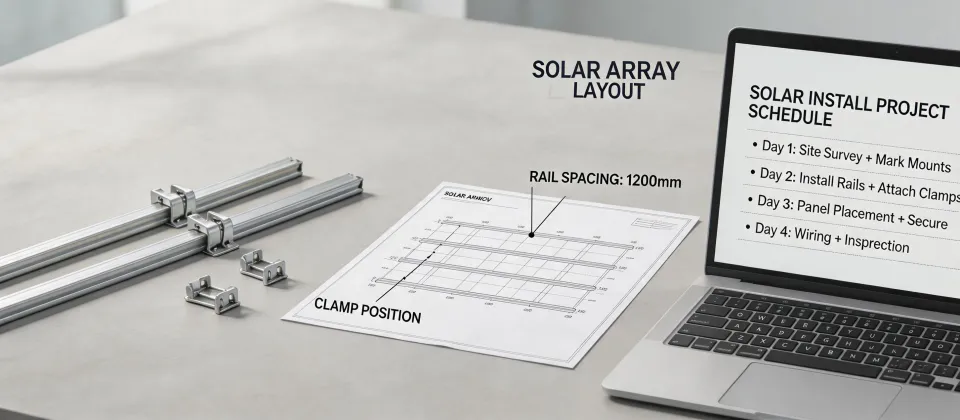
If you're an office administrator or facilities manager suddenly tasked with sourcing photovoltaic mounting systems for a commercial solar project, I get it. It feels like a lot. You're not an engineer—you just need the right hardware that doesn't fail inspection or blow the budget.
I've been managing procurement for our 200-person company across three locations since 2021. Processing around 40 orders a year for various building systems. Solar mounting was one of those things I had to learn fast. This checklist is what I wish I'd had then. It covers the four main mounting types, the compliance paperwork you must verify, and three mistakes that cost me real money.
Let's walk through it step by step.
Step 1: Match the Mounting System to Your Roof or Ground Type
This is where most people go wrong. They find a good price on a PV panel mounting system and assume it works for their site. From the outside, it looks like vendors just need to swap a few brackets. The reality is ground, roof, flat roof, and carport mounting systems have fundamentally different engineering requirements.
Ground mounting systems need to account for soil type, frost depth, and wind loads in an open field. They're usually aluminum or galvanized steel. For a 50 kW ground-mount project, you're looking at roughly 4-8 weeks lead time if the design is standard.
Roof mounting systems are lighter but require a structural review of the existing roof. If the roof is old or has unusual decking, don't assume the standard rail system fits.
Flat roof mounting systems often use a ballasted approach (no roof penetration) or a hybrid. Ballasted systems avoid leaks but add significant dead load—your structural engineer must sign off.
Carport mounting structures are a different beast entirely—they're architectural as much as structural. They also require shade analysis and sometimes more local permits.
Checklist for this step:
- What's the roof condition and pitch? Flat or sloped?
- Is the ground site graded and cleared?
- Can you get a soil report?
- Does the vendor offer a free site assessment? (They should.)
Step 2: Verify Compliance with UL 2703 and Local Codes
This step is non-negotiable. UL 2703 is the standard for solar panel mounting systems in the U.S. It covers fire rating, bonding, and grounding. If the system doesn't have this certification, don't buy it. Full stop.
Dodged a bullet when I double-checked the compliance documents for a flat roof mounting system from a new vendor in 2023. Was one click away from ordering 40 units. The certificate was expired by 6 months. The vendor said it's 'in renewal.' Not good enough. Finance rejected the PO anyway because the compliance paperwork wasn't current.
Also check local building codes. Some municipalities require specific fire-rated mounting systems for commercial rooftops. The vendor should provide a list of jurisdictions where their system has been approved, or at least provide the UL 2703 report you can forward to your building official.
Checklist for this step:
- Request the current UL 2703 certificate (not just a marketing claim).
- Verify the certificate covers your specific panel model.
- Ask if the system meets 2024 IBC wind uplift requirements.
- Check if local authority has any amendments.
Step 3: Get the Bill of Materials Right (This is Where You'll Save Money)
Here's a mistake I made early on: I assumed the quote for a ground mounting system included all the flashing, clamps, end caps, and splices. It didn't. The base kit covered the rails and main feet. Everything else was 'accessories.'
People assume the lowest quote means the vendor is more efficient. What they don't see is which costs are being hidden or deferred. At least one vendor on every quote comparison I've done will lowball the base system price and make it up on the small parts. You need the complete BOM—every rail, clamp, bolt, and grounding lug.
When I took over purchasing in 2020, I accepted a quote that was 15% below the next competitor. The price excluded the splice kits and grounding clamps. That cost us about $1,200 extra and delayed the install by a week while we ordered the missing parts. So glad I paid for rush delivery on that. Almost went standard to save $50, which would have meant missing the conference entirely.
Checklist for this step:
- Ask for an itemized BOM matched to your panel count.
- Verify the grounding method (WEEB clips vs. standard lugs).
- Check if rails come in standard lengths or need cutting on site.
- Get a price breakdown for hardware vs. labor if using their crew.
Step 4: Assess the 'Installability' Factor
This is the step most guides skip. A mounting system might be code-compliant and affordable, but if it takes 3x longer to install than the alternative, your total project cost goes up.
For rooftop systems, ask how many roof penetrations are needed per panel. Some ballasted flat roof systems require zero, but they're heavy. Some penetrated systems use fewer standoffs but more flashing work. Your installer should have an opinion—ask them before you buy.
For ground mounting systems, check if the system uses pre-assembled posts or field-welded connections. Pre-assembled goes faster but costs more upfront. We went with pre-assembled for our 100 kW ground mount in 2024. The installer finished in 6 days instead of the estimated 10. That saved us labor.
Is the premium option worth it? Sometimes. Depends on context.
Checklist for this step:
- Get installation time estimates from your installer for each option.
- Ask about specialized tools (e.g., specific torque wrenches).
- Check if the vendor provides installation drawings or 3D models.
- Read reviews from other installers, not just project owners.
Step 5: Plan for the Long Term
This was true 10 years ago when solar mounting was simpler. Today, you need to think about what happens in 15 years.
What if a panel fails and needs replacement? Can you remove a single panel without dismantling the row? For some roof systems, yes. For others, you end up removing half the array.
What about bird netting? If the system is at ground level or low roof, birds will nest under the panels. A system with integrated bird guard clips is worth the premium.
The 'local is always faster' thinking comes from an era before modern logistics. Today, a well-organized remote vendor can often beat a disorganized local one. But for replacement parts in 5 years, local matters again. I recommend this for systems with a strong national distributor network, but if you're dealing with a very remote site, you might want to consider a vendor with a regional warehouse near you.
Checklist for this step:
- Ask about replacement part lead times.
- Check if the system allows single-panel replacement.
- Review warranty terms (25 years on structure is standard).
- Ask about expansion flexibility (can you add panels later?).
Common Mistakes I've Made (So You Don't Have To)
Mistake 1: Ignoring the grounding audit trail. Your inspector will check that the mounting system has a continuous ground path. If your BOM doesn't include the specific grounding clips or lugs listed in the UL 2703 report, inspection fails. I saw this happen on a 30 kW project in 2022. Cost a week of delay.
Mistake 2: Not verifying shipping damage protocols. Ground mount rails are long. They ship via truck. If they arrive bent, who pays? Our vendor who couldn't provide proper invoicing cost us $2,400 in rejected expenses because we didn't document the damage within 24 hours. Now I take photos of every bundle before the truck leaves.
Mistake 3: Choosing price over support. The cheapest flat roof mounting system I bought in 2021 had zero technical support. The installation manual was a PDF with 3 diagrams. We spent an extra day sorting out the wire management clips. Not ideal, but workable. That unreliable supplier made me look bad to my VP when materials arrived late. Next time, I'll pay 10% more for a vendor that answers the phone.
Prices as of January 2025; verify current rates with your vendor. UL 2703 requirements are posted at UL.com. Always verify certifications directly.

Renata Silva
Renata Silva is a photovoltaic module analyst covering monocrystalline solar panels, bifacial modules, TOPCon and heterojunction designs, glass-glass construction, junction boxes, and module warranties. She interprets IEC 61215 and IEC 61730 evidence while comparing rated power, conversion efficiency, temperature coefficient, bifaciality, insulation, mechanical-load results, degradation assumptions, and tolerance. Her technical guides help EPC engineers, distributors, and project buyers separate qualification evidence from site-specific energy yield, climate exposure, installation constraints, and long-term performance risk.