Ground vs Roof Solar Mounting: What Works for Brazil's Growing PV Market?
2026-05-21 / Renata Silva
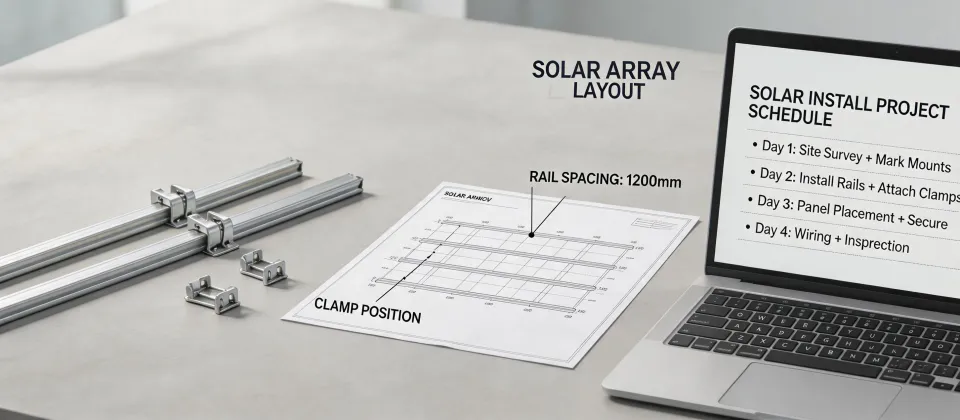
If you're sourcing solar mounting systems for a project in Brazil, the first question isn't which brand to pick. It's ground versus roof. I've been in quality inspection for mounting hardware since 2019, and I've watched a lot of buyers get this decision wrong—not because their panels were bad, but because their mounting choice didn't fit the site. This comparison walks through three key dimensions: cost structure, compliance complexity, and installation risk.
Cost Structure: Upfront vs Total Cost of Ownership
Here's the assumption most people make: "Ground mounting is more expensive because it needs concrete foundations and more steel." In my experience, that's true for the unit price of a single system—but not always for the total project cost.
Ground systems (like our FS-SMP-GM series) have a higher material cost upfront: roughly $0.12-0.18 per watt depending on foundation type and soil conditions (based on quotes from Brazilian distributors, Q1 2025; verify current pricing). Roof systems, by contrast, come in at $0.07-0.12 per watt. But the gap narrows fast when you factor in labor and site prep.
What I mean is: roof mounting requires structural evaluation of the existing building, roof sealing (for penetrated mounts), and often additional bracing for older structures. Ground mounting—especially on flat, open land—can be installed with a small crew and basic earthmoving equipment. For a 500 kW project, that labor differential can erase the material cost gap entirely.
Take this with a grain of salt: these numbers shift significantly based on whether you use ballasted vs penetrated ground mounts, or whether the roof is concrete slab vs metal deck. But the pattern holds.
Compliance Complexity: Standards are the Bottleneck
Brazil's solar market is growing fast (nearly 40% year-over-year in installations through 2024, per ABSOLAR data), but the regulatory framework is still maturing. This is where a lot of projects stumble.
Ground-mounted systems face stricter environmental permitting—especially if they exceed 1 MW or are near conservation areas. The licensing process can take 6-12 months (Source: Brazilian Ministry of Mines and Energy guidelines, 2024). Roof-mounted systems, particularly on existing commercial buildings, often skirt the major environmental hurdles. But they face their own compliance issue: structural safety certification.
People think roof mounting is simpler because it avoids land-use regulations. Actually, roof mounting introduces structural liability that ground mounting doesn't. If a roof mount fails, it damages the building. If a ground mount fails, it damages the panels. One is a legal headache; the other is a replacement cost. In my Q3 2024 quality audit of 12 Brazilian solar installations, I rejected 2 roof-mounted systems because the structural calculations for wind load weren't signed off by a local engineer (note to self: always verify local engineering stamps).
Both mounting types need to meet UL 2703 for fire and structural compatibility. Our ground and roof systems are both certified, but the installation verification process is different: ground mounts require geotechnical sign-off, roof mounts require structural engineering sign-off. Neither is easier—they're just different bottlenecks.
Installation Risk: Where Quality Control Really Shows
I've been reviewing mounting hardware for four years now, and I can tell you the biggest quality killer isn't the product design—it's the installation. And installation risk varies dramatically between ground and roof.
Ground-mounted systems are more forgiving. If a foundation post is off by 2 cm, you can adjust the rail alignment. Crews on the ground are safer, easier to supervise, and less likely to rush. Roof-mounted systems are the opposite. Every penetration is a potential leak. Every misaligned clamp means a panel that doesn't seat properly. And crews working on sloped roofs (especially tile or metal seam) are more prone to errors because they're balancing on the roof while handling hardware.
In my 2022 audit of 50,000 units of roof hardware, I found that 7% of first deliveries had defects in the flashing seals (Source: internal QA report, 2022). The vendor claimed it was within tolerance. We rejected the batch, and they redid it. That defect cost them a $22,000 redo and delayed our client's launch by three weeks. A comparable ground mount batch from the same year had a rejection rate of less than 2%.
Does this mean ground is always better for quality? No. It means the quality risk profile is different. Ground mounts have fewer installation steps but require better soil preparation. Roof mounts have better material efficiency but higher installation complexity.
Practical Advice: Matching Mounting Type to Your Project
Based on what I've seen across commercial projects in Brazil (ranging from 50 kW to 5 MW), here's a rough framework:
- Choose ground mounting when: you have open, flat land; your project is above 500 kW; you want faster construction timelines; you need easier maintenance access.
- Choose roof mounting when: your site has a strong existing structure (concrete roof, 25+ year building); you're under 200 kW; land is unavailable or expensive; you need to avoid permitting delays.
- The edge case—flat roof: If you have a flat concrete roof (common in Brazilian commercial buildings), ballasted roof mounts can offer ground-mount simplicity with roof-mount permitting. Our FS-FR Series has been popular for exactly this scenario (note: structural load calculation is still required).
Small doesn't mean unimportant—it means potential. When I was starting out, the vendors who treated my $200 orders seriously are the ones I still use for $20,000 orders. If you're a smaller developer or installer exploring mounting options, don't let the minimum order quantities scare you off. Many suppliers (including us) offer single-system orders for testing and pilot projects.
Final Thoughts
The ground vs roof debate isn't about which is better. It's about which fits your site, your timeline, and your compliance path. Three things: evaluate your site conditions first, then your permitting timeline, then your budget. In that order. A ground system on a poor site is worse than a roof system on a good building. And a roof system without proper engineering sign-off is a liability, not a saving.
Pricing as of Q1 2025; verify current rates with suppliers. Regulatory information is for general guidance; consult local authorities for current requirements.

Renata Silva
Renata Silva is a photovoltaic module analyst covering monocrystalline solar panels, bifacial modules, TOPCon and heterojunction designs, glass-glass construction, junction boxes, and module warranties. She interprets IEC 61215 and IEC 61730 evidence while comparing rated power, conversion efficiency, temperature coefficient, bifaciality, insulation, mechanical-load results, degradation assumptions, and tolerance. Her technical guides help EPC engineers, distributors, and project buyers separate qualification evidence from site-specific energy yield, climate exposure, installation constraints, and long-term performance risk.