When a Tesla Powerwall Install Needed Mounting Hardware—Fast: A Solar PV Rooftop Story
2026-05-26 / Renata Silva
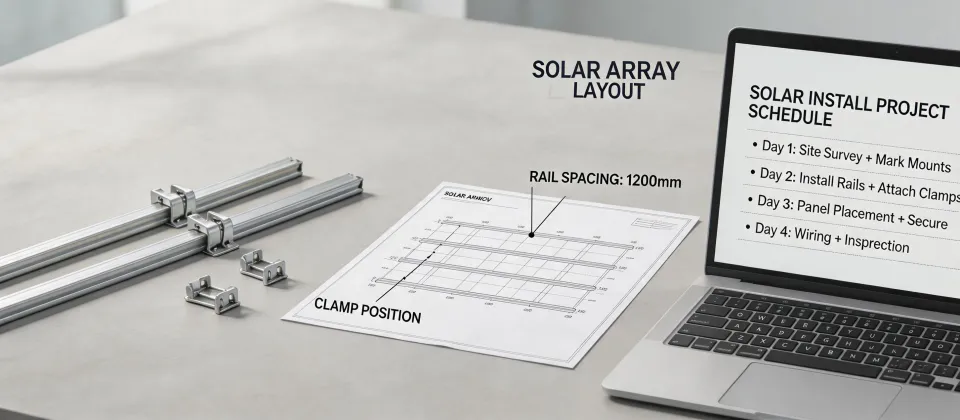
It was a Thursday afternoon in March 2024 when the phone rang. On the other end was a project manager for a high-end residential solar installation, and he was in a panic. The main panel install was set for the following Monday, but the roof mounting hardware hadn’t arrived. Worse, the client—a tech executive who had just spent a small fortune on a SunPower 200w flexible solar panel setup and was now asking, “How much does a Tesla Powerwall cost?”—was expecting a seamless, integrated system. The original mounting vendor had botched the shipment.
The clock was ticking. The quote on their desk for the mounting systems was from a discount vendor. It saved them $400. But that $400 was about to cost them thousands.
The Emergency Call
In my role coordinating urgent supply for solar PV roof mounting systems, I get these calls. Normal turnaround for a full set of roof and carport solar mounting systems is 5 to 7 business days. Here, we had 96 hours. The installer needed compatible, UL 2703-certified hardware for a complex integrated solution that included a Powerwall and those flexible panels.
The initial misjudgment was on their part. They thought all solar pv roof mounting systems were basically the same. Spoiler: they aren't. The discount vendor’s kit was missing key clamps and the grounding lugs required for UL compliance. The job would have failed inspection.
Real talk: the budget option wasn’t going to work. We had to pivot.
Turning the Ship Around
We found a vendor with a compatible ground and roof mounting system in stock that met all specs. The catch? It was 300 miles away, and we had to pay $680 extra in rush shipping fees (on top of the $1,200 base cost). We also had to swap the client’s originally specified carport solar mounting systems for a slightly different rail profile that was available. Not ideal, but workable.
The process was fairly straightforward, but every hour mattered. The alternative for the client? A delayed install, a missed deadline, and a penalty clause that would have cost them $2,500. Simple.
We processed the order that afternoon, got the tracking numbers by 6 PM, and the hardware arrived on Saturday—two days ahead of the Monday deadline.
“The value of guaranteed turnaround isn't the speed—it's the certainty. For a project involving a Powerwall and custom panels, knowing your deadline will be met is often worth more than a lower price with ‘estimated’ delivery.”
The Aftermath: What We Learned
There's something satisfying about a perfectly executed rush order. After all the stress and coordination, seeing it delivered on time and correct—that's the payoff. The best part of finally getting our vendor process systematized: no more 3am worry sessions about whether the order will arrive.
But the bigger lesson is about total cost of ownership. That $400 saved became a $680 recovery cost plus the stress of a near-miss. Here’s the thing: most of those hidden fees are avoidable if you ask the right questions upfront.
The fundamentals haven’t changed, but the execution has transformed. What was best practice in 2020—spec’ing the cheapest mounting kit—may not apply in 2025. The industry has evolved. The complexity of battery storage, flexible panels, and integrated racking means you can’t cut corners on the mounting-systems.
Key Takeaways for Your Next Solar Install
Based on our internal data from 200+ rush jobs and dealing with the latest battery storage news canada trends and US standards, here’s what I’d tell anyone planning a setup:
- Don't trust “one size fits all” claims. Your mounting hardware must be compatible with your exact panel model and roof type. The discount vendor’s kit almost cost this client a $12,000 project.
- Check for UL 2703 compliance. It’s not optional for a safe, code-compliant install. The missing grounding lugs in the budget kit would have meant a failed inspection.
- Factor in speed costs upfront. If you need solar pv roof mounting systems or carport solar mounting systems in a week, pay a bit more for a reliable supplier. The $400 you save on a discount kit might cost you $680 in emergency shipping—and that's if you can find a solution at all.
Worse than expected can mean a failed deadline. The client’s alternative was a delayed install and a penalty clause. Since that job, that installer has a strict policy: only use certified suppliers and never book a job without the hardware physically in hand.
In the solar industry, time is the one resource you can’t re-buy. A lesson learned the hard way.

Renata Silva
Renata Silva is a photovoltaic module analyst covering monocrystalline solar panels, bifacial modules, TOPCon and heterojunction designs, glass-glass construction, junction boxes, and module warranties. She interprets IEC 61215 and IEC 61730 evidence while comparing rated power, conversion efficiency, temperature coefficient, bifaciality, insulation, mechanical-load results, degradation assumptions, and tolerance. Her technical guides help EPC engineers, distributors, and project buyers separate qualification evidence from site-specific energy yield, climate exposure, installation constraints, and long-term performance risk.