Solar Panels and Wind Turbines for Homes: Fixed vs. Portable Mounting Systems (And What UL 2703 Actually Means)
2026-08-19 / Renata Silva
-
The Comparison Framework: Size, Certification, and Intent
-
Dimension 1: UL 2703 Photovoltaic Mounting Systems Standard—Fixed vs. Portable
-
Dimension 2: Solar Panels and Wind Turbines for Homes—The Cost per Delivered Watt
-
Dimension 3: Portable Solar Panel Mounting Systems—Use Cases, Limits, and Tradeoffs
-
Dimension 4: Does a Power Inverter Drain Car Battery? A Mounting System Question
-
Scenario-Based Selection: What I'd Recommend
Here's the thing: most home renewable energy arguments start with solar panels vs. wind turbines. In my experience, the more useful question is how you mount the equipment. A good solar array can underperform if the mounting system is wrong, and a wind turbine can become an expensive mistake if its tower and anchoring are an afterthought.
I work as a quality and compliance manager at Mounting Systems, so most weeks I'm checking UL 2703 reports and structural drawings before hardware goes out the door. I've stopped more than one order because the grounding path wasn't documented. This article is my take on two broad options: fixed solar mounting systems and portable solar panel mounting systems—and where home wind turbines fit in.
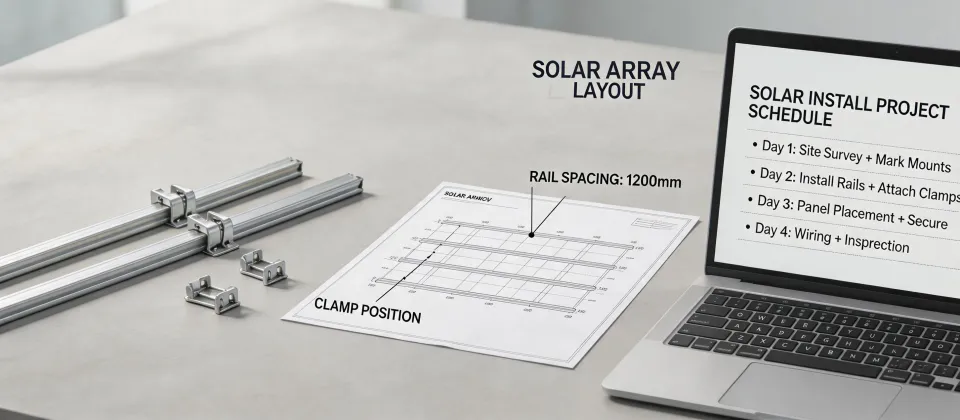
The comparison that matters is fixed vs. portable. Permanent rooftop or ground-mounted systems are designed to stay in place for twenty years. Portable mounting systems are designed to be moved. Both need good hardware. Both will fail if sized wrong.
Let me be clear about my point of view: I don't think there is a 'best' mounting system. There is the right system for your site, your budget, and your tolerance for maintenance.
The Comparison Framework: Size, Certification, and Intent
Before comparing, here are the criteria I use when I'm approving a mounting system:
- UL 2703 compliance and grounding documentation
- Real-world cost per energy produced, not just hardware price
- Installation complexity and whether the design fits the actual roof or ground
- Battery and inverter planning, especially for portable and mobile systems
Those four dimensions cover most quality problems I see. The boring paperwork dimension is, honestly, where 'good' separates from 'looks good in a catalog.'
Dimension 1: UL 2703 Photovoltaic Mounting Systems Standard—Fixed vs. Portable
If you look at a permanent roof mount, ask for UL 2703 listing. According to UL Standards & Engagement, UL 2703 covers 'mounting systems, mounting devices, clamping/grounding devices and equipment for flat-plate photovoltaic modules and panels' (ul.com). In simple terms, it means the rack has been tested for structural loads, grounding bonding, and related PV mounting safety requirements.
A fixed, grid-tied solar array should, in my opinion, be built with a UL 2703 listed mounting system. Not because the label magically makes the install better, but because the test report tells you what the hardware is rated to do. A portable solar panel mounting system, on the other hand, may not need UL 2703 listing if it's never permanently attached and never interconnected with the grid. But if you're leaving a portable frame out for months or wiring it into a building, ask for the same documentation.
Here's where I made an assumption mistake once. I assumed a 'UL-compliant' aluminum rack from a new supplier would behave like the tested system on our approved list. Didn't verify. Turned out the coating around the grounding point was different, and the bonding resistance was outside our specification. The supplier said it was 'within industry standard.' We rejected that batch. Lesson: don't assume a mounting system is UL 2703 listed just because it's aluminum. Ask for the written test report. Not a summary. The report.
Conclusion for this dimension: for permanent installations, use UL 2703 listed mounting systems. For portable setups, verify your local code requirements before relying on a frame's claims. Period.
Dimension 2: Solar Panels and Wind Turbines for Homes—The Cost per Delivered Watt
Now let's address the big question: solar panels and wind turbines for homes, how do they actually compare? Start with cost.
How much do wind turbines cost? A small residential wind turbine is often quoted in the $30,000 to $80,000 range installed for a 10-kW system (Source: U.S. Department of Energy, energy.gov; verify current pricing). A comparable 10-kW solar array, before tax credits, often lands in the $25,000 to $40,000 range depending on roof condition, mounting system choice, and labor (Source: NREL residential solar data, 2024; verify current pricing). Those are rough numbers, but the direction is consistent.
The part that surprises people is not the turbine itself. It's the mounting. A wind turbine tower needs a foundation, a strong structural connection, and access for maintenance. That's a mounting system—one with a lot more civil work than a solar rack. If your site doesn't have strong average wind speeds, that expensive tower sits there producing very little. In my opinion, solar usually beats wind for a home unless you have excellent wind resource and a lot of open space.
Does that mean 'solar panels and wind turbines for homes' is a silly idea? Not at all. A hybrid setup can make sense for an off-grid cabin in a windy, cloudy area. But for a typical house connected to the grid, a well-designed solar array with a solid fixed mounting system is usually the better financial choice. That's the honest limitation.
Conclusion for this dimension: per installed dollar, well-mounted solar PV wins for most homes. Wind can win on specific sites with strong wind, but the mounting costs need to be in the calculation.
Dimension 3: Portable Solar Panel Mounting Systems—Use Cases, Limits, and Tradeoffs
Portable solar panel mounting systems have become much better in the last few years. You can unfold a frame, put a panel on it, position it at the right angle, and have power in minutes. They are great for:
- RVs and vans
- Temporary power at a work site
- Emergency backup for a critical load
- Testing solar before committing to a permanent roof install
I support that use case. It's useful. It's also not a replacement for a permanent, UL 2703 listed mount if you want net metering and whole-home backup. Local permitting almost always wants a fixed mount with stamped structural drawings. A portable frame is not designed for years of wind uplift on an exposed roof.
I do remember reviewing a portable frame for a demonstration project. Even after choosing it, I kept second-guessing. What if the wind loading was overstated? The first serious storm was stressful. It held, but we added guying points to the next order. That's the thing about portable mounting systems: they work best when you treat them as portable, not as permanent installations you move once a year.
Looking back, I should have specified minimum clamp torque and frame anchoring requirements on the first purchase order. At the time, the installers seemed confident they knew. The follow-up instructions that came out of that first storm proved otherwise. Not ideal, but workable. A lesson learned the hard way.
Conclusion for this dimension: portable solar is excellent for temporary or mobile power. For a permanent home solar install, choose a fixed mounting system engineered for local weather.
Dimension 4: Does a Power Inverter Drain Car Battery? A Mounting System Question
This sounds unrelated to mounting systems, but it comes up whenever someone buys a portable solar array with an inverter. So: does a power inverter drain car battery? Yes, it can. If you connect a 1,500W inverter to a car's 12V battery while the engine is off, the inverter can pull roughly 125A. On a typical 100Ah starter battery, that's less than an hour of full load before the battery is critically low.
The fix is not 'don't use solar.' The fix is to pair portable solar with a separate battery bank or a solar generator. A portable solar panel mounting system can recharge that battery bank during the day. That way, the inverter draws from the battery, not from your car's starting battery. That's the sequence that actually works.
If you're reviewing a portable solar kit's spec sheet, check the included inverter and battery. Some kits come with a tiny 12V socket, which is fine. Others expect you to supply a car battery. In my opinion, avoid that design unless you understand the discharge limit. A small battery is better than a dead vehicle at the end of an off-grid weekend.
Conclusion for this dimension: the inverter itself isn't the problem; the source battery and load sizing are. Use a dedicated battery for portable solar systems, not the car's starter battery.
Scenario-Based Selection: What I'd Recommend
If you're making the decision today, here's how I'd frame it:
- Permanent whole-home solar: choose a fixed, UL 2703 listed roof or ground mounting system. Verify the manufacturer's test report and structural calc for your wind and snow loads.
- Temporary or mobile power: choose a portable solar panel mounting system with durable materials, adjustable angle, and a charge controller that matches your battery voltage.
- Adding a wind turbine to a home solar system: first check average wind speed at hub height. If it's below about 10 mph, the turbine will spend most of its time idle. Run the full installed cost, including tower, foundation, and mounting, before comparing it to adding more solar panels.
There is no universal best mounting system. There is the one that matches your site, your goals, and your willingness to do the paperwork.
If you ask me, the 'solar panels and wind turbines for homes' debate is less interesting than the mounting question underneath it. Good mounting makes a good system reliable. Bad mounting makes a good system unreliable, no matter how many watts the modules say on the label.
So before you order panels or price a turbine, decide how and where the equipment will live. Then run the numbers, ask for the UL 2703 report, and be honest about the limitations of portable gear. That process will save you more money than any one temperature-adjusted solar tracking mount ever will.

Renata Silva
Renata Silva is a photovoltaic module analyst covering monocrystalline solar panels, bifacial modules, TOPCon and heterojunction designs, glass-glass construction, junction boxes, and module warranties. She interprets IEC 61215 and IEC 61730 evidence while comparing rated power, conversion efficiency, temperature coefficient, bifaciality, insulation, mechanical-load results, degradation assumptions, and tolerance. Her technical guides help EPC engineers, distributors, and project buyers separate qualification evidence from site-specific energy yield, climate exposure, installation constraints, and long-term performance risk.